I enjoy books that treat everyday print as a record of changing tastes. These two volumes of Dian Hanson’s The History of Men’s Magazines do exactly that, preserving magazine imagery alongside publishing history. Their bold covers immediately announce the subject, but the historical context gives them another role: references for photography, graphic design, and popular culture.
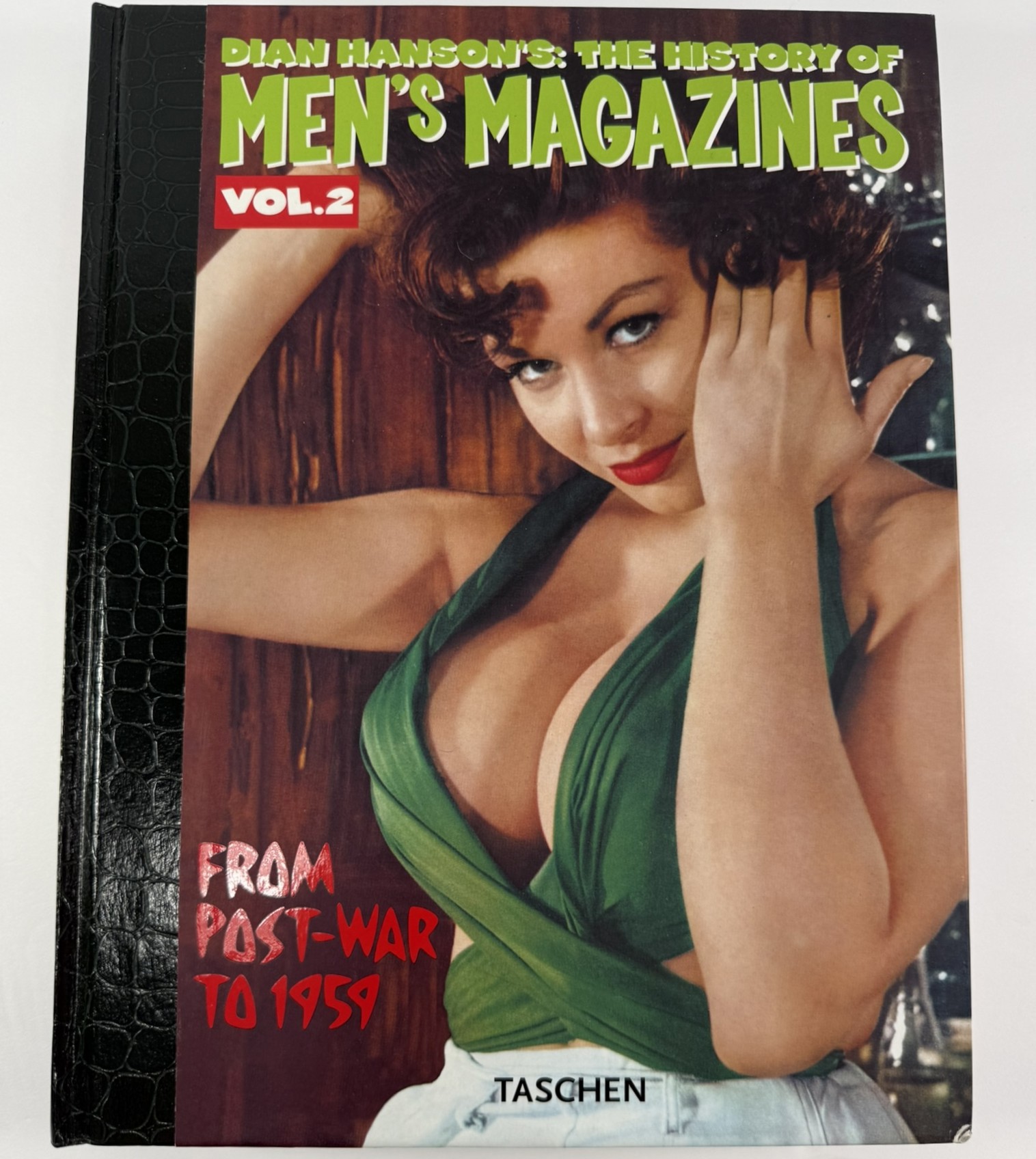
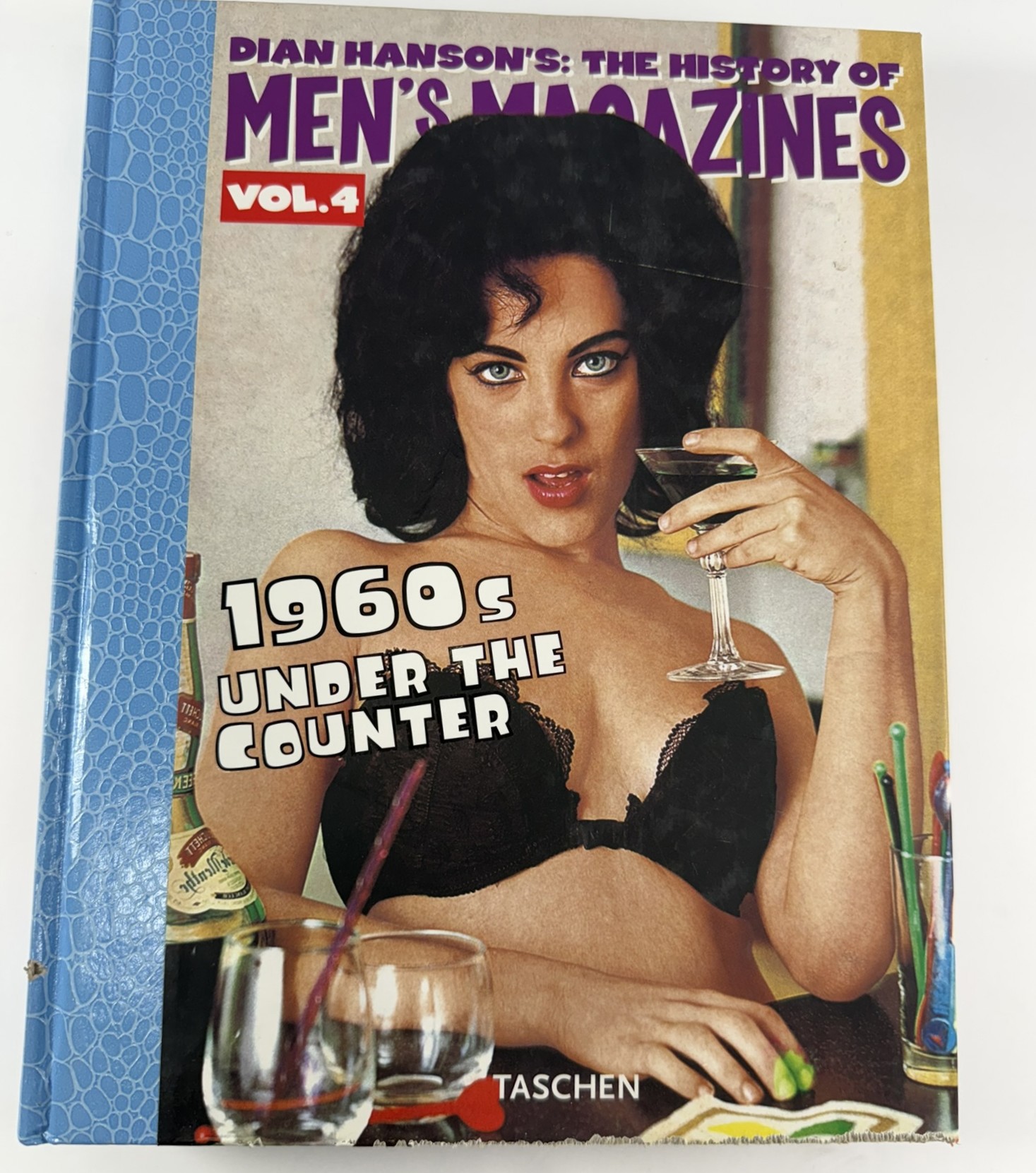
The photographed Volume 2, From Post-War to 1959, carries a 2004 TASCHEN copyright and ISBN 3-8228-2625-1. Volume 4, 1960s Under the Counter, carries a 2005 copyright and ISBN 3-8228-3635-4. Both state that they were printed in Germany. Those details identify these copies more precisely than their cover titles alone, although copyright dates do not independently confirm a first printing.
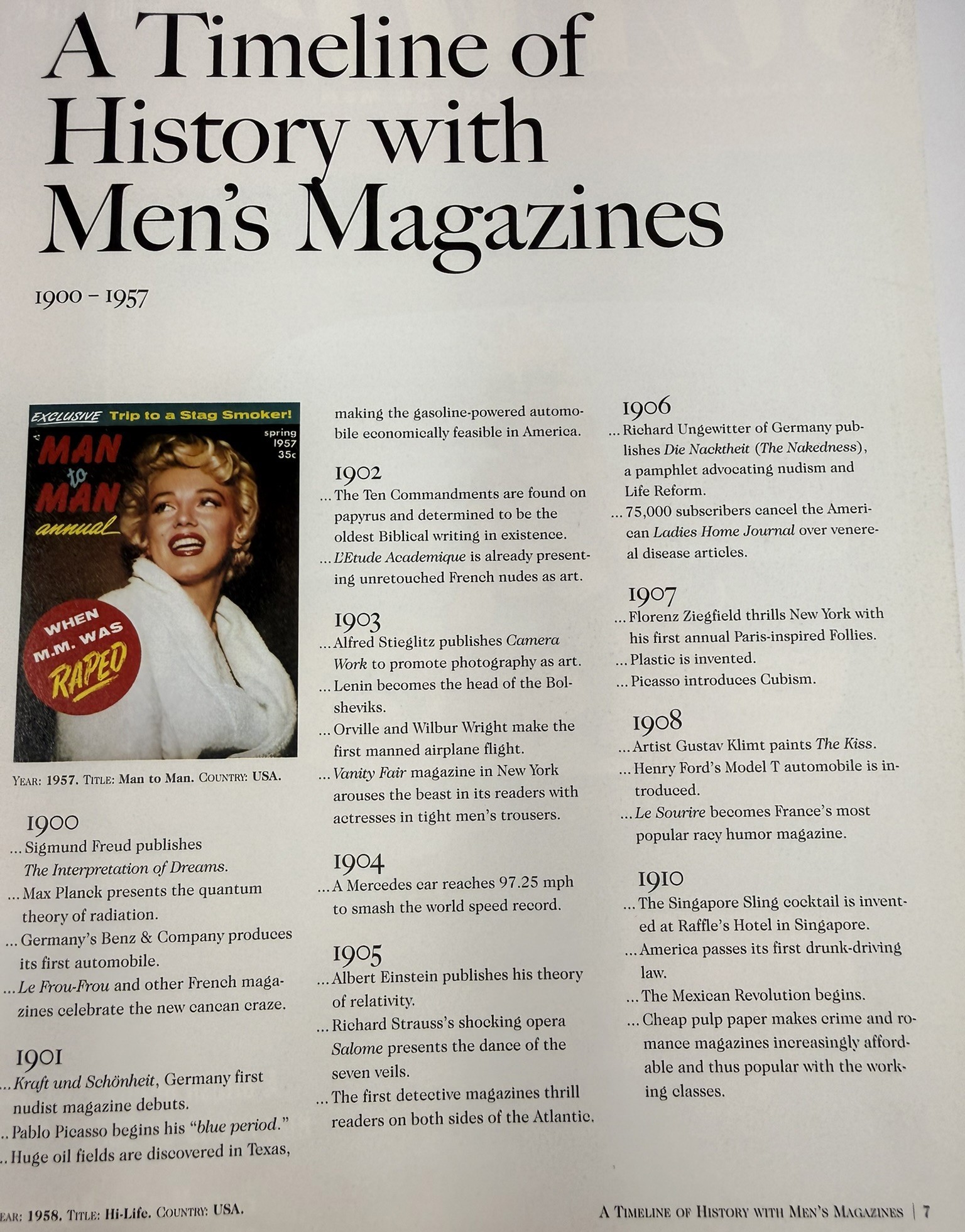
Volume 2 examines the postwar magazine world, when American publishing gained influence and pin-up photography evolved alongside changing social attitudes. The supplied timeline page shows Hanson placing magazine developments beside broader events. That arrangement makes the book useful for readers interested in how commercial imagery relates to its period.
Volume 4 moves into the specialized publishing of the 1960s. Its contents cover California publishers, British and French material, and photographers including Elmer Batters. Hanson brings professional experience to the research: TASCHEN notes that she worked in magazine publishing from 1976 to 2001 before joining the book publisher.
The original series comprises six volumes, so these two books represent selected installments rather than a complete set. Later reissues carry different ISBNs, making edition details important when comparing copies. Their multilingual presentation also matters: the supplied pages include English, German, and French text.
TASCHEN’s related output includes The Art of Pin-up, which surveys illustrators and their work. Other publishers explore adjacent subjects; Schiffer, for example, publishes Bombshell: The Pin-Up Art of John Gladman. These are related visual-art references, not alternate editions of Hanson’s history.
I could not verify a recent completed-sale value for either photographed edition. Current asking prices, newer reprints, and auction lots containing unrelated books do not establish what these copies have sold for. For comparison, I would first match the volume and ISBN, then assess binding wear, completeness, and any inscriptions.